

🌺
Forgotten Women Who Shaped India’s Past
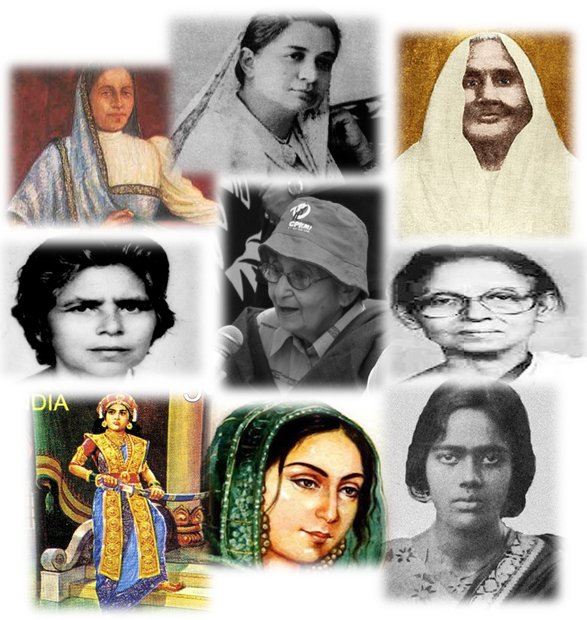
History, as it has often been written, tends to spotlight kings, warriors, and male leaders while many powerful women remain hidden in its shadows. Yet, behind India’s cultural and political evolution are countless women who displayed courage, resilience, and brilliance. Some fought on the battlefield, some challenged oppressive traditions, and others paved the way for education and reform. These unsung heroines of history deserve recognition, not only for their sacrifices but for the inspiration they offer to modern women.
⚔️ Rani Abbakka Chowta – The Queen Who Defied the Portuguese
Long before India’s freedom struggle gained momentum, Rani Abbakka Chowta of Ullal (Karnataka) stood as one of the earliest defenders of Indian sovereignty. In the 16th century, she resisted Portuguese colonial forces who sought control over trade routes. Leading her navy and soldiers, Abbakka launched guerrilla-style attacks and successfully pushed back European dominance along the Malabar Coast.
Her story reminds us that resistance to colonialism was not just led by men like Tipu Sultan or Shivaji—it was also carried by fearless queens.
📚 Savitribai Phule – The First Lady of Education
While many know of her husband Jyotirao Phule, the legacy of Savitribai Phule (1831–1897) is often underplayed. She was India’s first female teacher and a revolutionary social reformer who worked tirelessly for women’s education at a time when it was considered taboo.
Facing insults, social boycott, and even physical attacks, Savitribai opened schools for girls, especially those from marginalized communities. She not only transformed education but also fought against child marriage, caste discrimination, and the oppression of widows.
Her courage gave Indian women the right to dream beyond domestic walls.
🏹 Rani Velu Nachiyar – The Warrior Queen Before the Revolt of 1857
Decades before Rani Lakshmibai of Jhansi became a symbol of resistance, Rani Velu Nachiyar of Tamil Nadu (1730–1796) fought against the British East India Company. Known as the “Veeramangai” (brave woman), she formed alliances, built an army, and even created India’s first recorded suicide squad led by women, called the Udaiyaal Army.
She remains one of the earliest monarchs to wage a war against colonial forces—yet her name rarely appears in textbooks.
🪷 Begum Hazrat Mahal – The Rebel Queen of Awadh
During the Revolt of 1857, Begum Hazrat Mahal emerged as a formidable leader after her husband, Nawab Wajid Ali Shah, was exiled. Taking control of Lucknow, she allied with Indian rebels and challenged British authority. Unlike many aristocratic women of her time, Hazrat Mahal refused a life of exile and instead led troops into battle, managing strategy and diplomacy alike.
Her leadership made her one of the most significant, though often overlooked, female figures in India’s first war of independence.
✊ Kittur Rani Chennamma – A Freedom Fighter Before Freedom
Nearly 40 years before 1857, Rani Chennamma of Kittur (Karnataka) rose against the British over the Doctrine of Lapse. After losing her son, she adopted an heir to her kingdom, which the British refused to recognize. Her defiance led to one of the earliest armed rebellions against colonial rule.
Though eventually defeated, her courage laid the groundwork for later freedom struggles, inspiring future generations.
🌸 Why Remembering Them Matters
The stories of these women highlight a powerful truth: India’s history was shaped not only by men in power but also by women who dared to challenge injustice. Their contributions often remain unacknowledged because history was recorded through patriarchal lenses.
By remembering them, we:
- Give credit where it was long overdue.
- Inspire young girls to break barriers in modern society.
- Redefine leadership by including women who fought, taught, and led with vision.
