

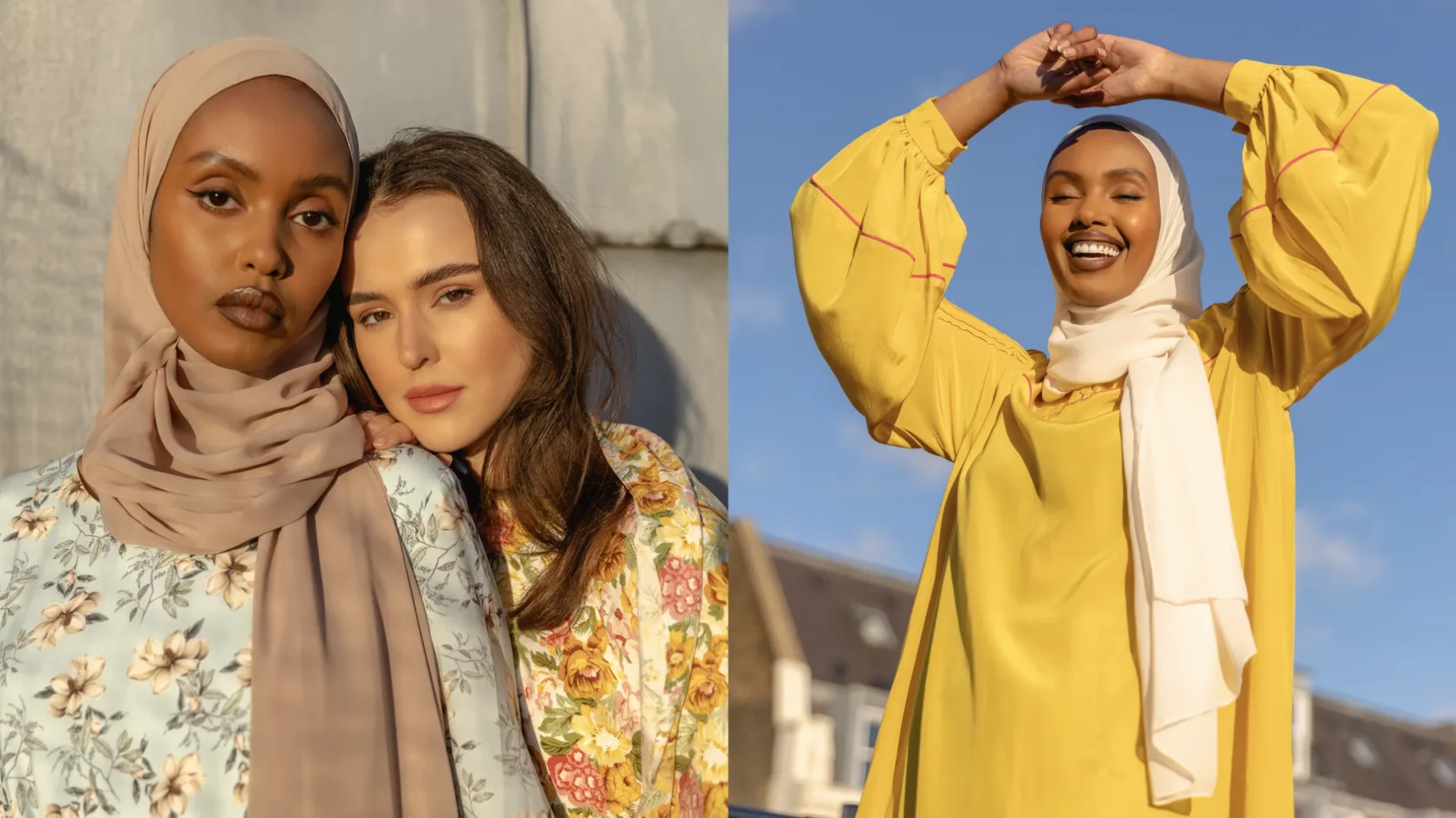
A Market Too Big to Ignore
Modest fashion is no longer a niche—it’s a global powerhouse. Reports value the market at USD 85–96 billion in 2025, with forecasts suggesting a steady 5–7% annual growth rate in the coming years.
What’s fueling this rise? A combination of faith-driven choices, cultural pride, and modern reinterpretation. For Muslim women, modest fashion has always existed, but today it is evolving into a multi-layered category that embraces individuality as much as tradition.
Beyond the Stereotypes
Too often, modest fashion is treated as a monolithic space. In reality, it spans:
- Hijab and Abaya Styles: From flowing classics in the Middle East to edgy, urban abayas in London or Dubai.
- South Asian Adaptations: Sarees and salwar kameez with higher necklines, longer blouses, or layering elements that balance modesty with elegance.
- Western Modestwear: High-neck dresses, maxi skirts, and roomy tailoring integrated seamlessly into mainstream fashion.
- Sports Modesty: Nike, Adidas, and emerging South Asian brands are innovating sports hijabs, breathable abayas, and modest swimwear.
This diversity shows that modesty is not about restriction—it’s about agency. Women are remixing traditional silhouettes with global trends, proving that modesty and style can coexist without compromise.
The Digital Catalyst
Social media has been central to this shift. Influencers like Halima Aden and a growing base of Indian, Pakistani, and Gulf-based creators have reframed modest wear as aspirational, not apologetic. TikTok and Instagram are full of tutorials showing how to layer, accessorize, or adapt global trends into modest wardrobes.
E-commerce platforms are responding: ASOS, Zara, and H\&M now release Ramadan collections, while regional labels such as Aab, Modanisa, and Inayah have built loyal online communities. For India, this is fertile ground—bridging homegrown textile heritage with global modest aesthetics.
The Business Opportunity for India
India’s fashion ecosystem is uniquely positioned to lead:
- Textiles: Cotton, khadi, silk, and chikankari are natural fits for breathable modestwear.
- Cultural Capital: Indian women are already accustomed to layered dressing—sarees, dupattas, kurtas—making modest fashion more a natural continuation than a separate category.
- Youth Demand: Gen Z Muslim women in India are carving out new hybrid looks: pairing jeans with abayas, layering denim jackets over long kurtas, or reimagining dupattas as statement scarves.
For brands, the sweet spot lies in designing climate-smart, culturally resonant, and globally stylish modestwear that feels both modern and rooted.
Challenges and Critiques
Despite its growth, modest fashion faces hurdles:
- Tokenism: Many mainstream brands treat modest collections as seasonal PR stunts (often only around Ramadan), not as year-round needs.
- Size Inclusivity: Extended sizing is often missing, sidelining plus-size modest dressers.
- Representation: Campaigns sometimes exoticize modesty instead of normalizing it.
The call from consumers is clear: make modest fashion consistent, inclusive, and authentic.
The Cultural Meaning of Modesty
Modest fashion is not just commerce—it is cultural storytelling. For some women, it is a religious practice. For others, it is a personal style choice or a political stance against over-sexualization in mainstream fashion.
What unites them is the sense of control—choosing how much of themselves they want to reveal, and how they want to present to the world. In this sense, modest fashion is deeply feminist: it allows women to reclaim narrative power over their clothing.
The Future: Diversity at the Center
Looking ahead, modest fashion will thrive where it is treated as diverse, innovative, and integral:
- Collaboration: Between global giants and local designers who understand cultural nuance.
- Innovation: Period-friendly fabrics, climate-adapted cuts, and tech-infused hijabs for sports.
- Visibility: Campaigns featuring South Asian, Middle Eastern, Black, and plus-size Muslim women—not as exceptions, but as the norm.
